
Performing an energy audit before home battery California sizing allows homeowners to identify efficiency improvements that lower their total electricity demand, preventing the purchase of an unnecessarily large and expensive storage system. By accurately calculating your energy load profile first, you can right size your battery to maximize financial savings and grid independence under NEM 3.0 regulations.
Most California homeowners rush into purchasing high capacity battery systems based on twelve months of utility bills, only to discover they paid thousands for storage they will never fully utilize. Under the strict requirements of NEM 3.0, the financial success of your solar investment depends on precision rather than guesswork. Relying solely on historical billing data ignores the underlying inefficiencies in your home's envelope that often inflate your perceived energy needs. This guide explains why an independent energy audit is the critical first step in right sizing your storage. We will examine the mathematical relationship between thermal performance and battery capacity, identify the hidden waste that solar installers typically overlook, and demonstrate how objective data secures the highest possible return through SGIP and local incentives. By focusing on your true load profile, you can avoid high pressure sales and build a system optimized for actual performance.
The New Reality of California Solar: Why Batteries are Essential Under NEM 3.0
The landscape for California solar underwent a fundamental shift in April 2023 with the implementation of Net Billing, commonly known as NEM 3.0. Under previous iterations, homeowners received a near 1:1 retail credit for the excess energy their panels sent back to the grid. Today, those export rates have plummeted by roughly 75 percent. This change creates a massive disparity: you sell your clean energy to the utility for pennies during the day, only to buy it back for peak prices in the evening.
This shift makes battery storage the primary mechanism for protecting your solar return on investment. The critical window occurs between 4 PM and 9 PM. During these hours, solar production drops off just as utility rates hit their highest points. For a homeowner in the Folsom area, this coincides with the heaviest air conditioning demand during our hot summer months. Without a battery, you are forced to pull expensive power from the grid during these peak hours, negating much of the benefit of having solar panels.
While batteries are now essential for a functional solar strategy, they represent a significant capital investment. Most high quality lithium iron phosphate systems range from $10,000 to over $20,000 per unit once installed. Given this price point, the independent energy audit value becomes clear. Performing an energy audit before home battery California sizing ensures you are not buying excess capacity to cover for home inefficiencies. Precise sizing is the only way to maintain financial sanity when navigating the high costs of modern energy storage.
The Mistake Solar Installers Make: Why Utility Bill Data is Not Enough
Most solar companies start the process by requesting your Green Button Data or past utility bills. While this historical data provides a snapshot of your consumption, it is a flawed foundation for sizing expensive hardware. These documents tell you how much energy you used, but they are silent on how much energy you actually wasted.
In a Folsom home energy audit, we frequently find that high evening usage is driven by a thermal envelope that fails to hold its temperature. If your attic insulation has settled or your ductwork is leaking conditioned air into the crawlspace, your HVAC system must run longer and harder during that critical 4 PM to 9 PM window. A solar installer looking only at your PG&E or SMUD bill sees this high load as a requirement for more storage capacity.
This approach leads to sizing for waste. If you buy a $15,000 battery to power a leaky home, you are effectively subsidizing your home’s inefficiency with expensive hardware. This is why we advocate for an energy audit before home battery California sizing. By adopting an Efficiency First mindset, you address the structural flaws in your home’s performance before committing to Storage Second. This ensures your battery is sized for your actual needs, not your home’s thermal defects.
How an Independent Energy Audit Reveals Your True Load Profile
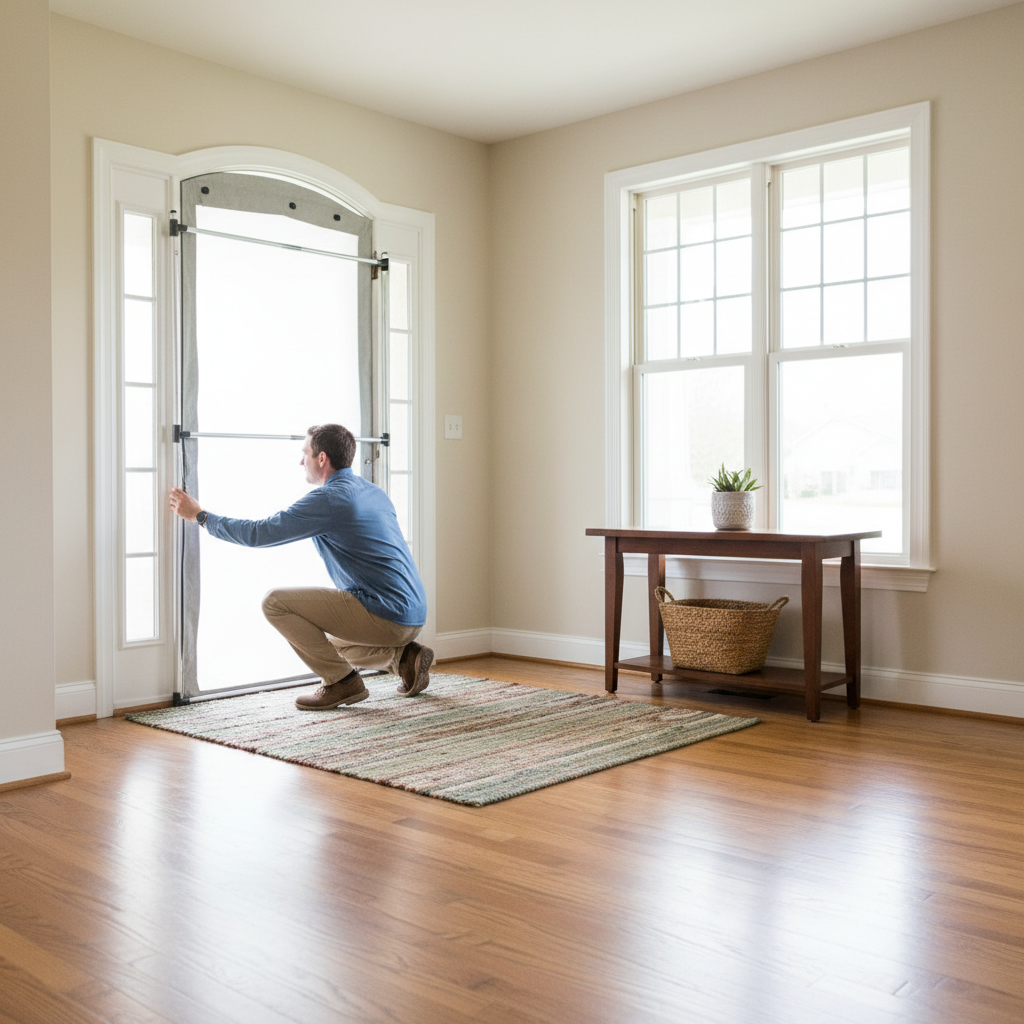
While a utility bill shows the result of energy use, our inspectors use diagnostic tools to find the cause of high demand. The blower door test is a primary tool in this process. By mounting a powerful, calibrated fan into an exterior door frame, we depressurize the home to pinpoint exactly where outside air is infiltrating the building envelope. In the Folsom area, leaky seals around windows, recessed lighting, and wall top plates often force air conditioners to cycle twice as often during the 4 PM to 9 PM peak window. An installer looking at a bill sees a high load; we see a home that is failing to hold its conditioned air.
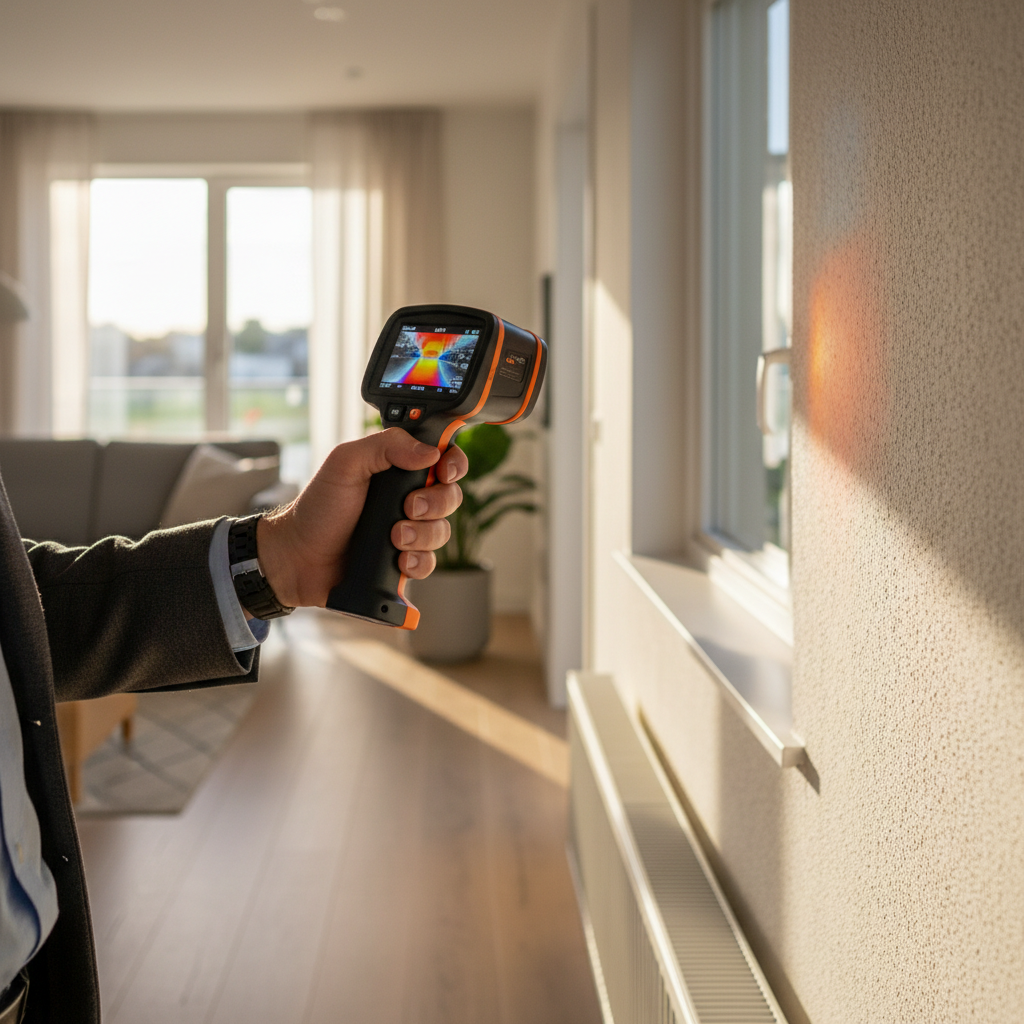
We pair the blower door test with infrared thermal imaging. This technology visualizes heat transfer that is invisible to the naked eye, allowing us to identify settled insulation in walls or thermal bypasses in the attic that act like a chimney. When insulation is missing or improperly installed, your HVAC system must work harder to overcome the constant heat gain from the California sun. This creates a high evening load profile that a solar salesperson will likely try to solve by adding more hardware.
Efficiency Measure | Estimated Cost | Impact on Load | Potential Battery Savings |
|---|---|---|---|
Air Sealing & Attic Insulation | $1,500 – $2,500 | 15% - 25% Reduction | Eliminates need for second battery ($12,000+) |
Duct Sealing | $800 – $1,200 | 10% - 20% Reduction | Reduces discharge rate requirements |
Smart Thermostat Optimization | $200 – $400 | 5% - 10% Reduction | Extends battery life during peak hours |
The independent energy audit value lies in this specific math. If an audit reveals that a $1,500 investment in weatherization can reduce your evening cooling load by 20 percent, it may eliminate the need for a second $12,000 battery. Performing an energy audit before home battery California sizing provides the granular data necessary to decide if you are powering a home or simply powering its defects.
Right Sizing Your Battery Storage: The Math of Thermal Performance

When comparing a leaky home to a tight one, the mathematical shift in battery requirements is stark. In Folsom, a standard 2,200 square foot home with original 1990s insulation often faces an evening cooling load of 4.5 kW during a July heatwave. Over the five hour NEM 3.0 peak window, that home consumes 22.5 kWh. To cover this load, a solar installer will typically specify two batteries, likely totaling 20 to 27 kWh of capacity, at a price tag often exceeding $22,000. Conversely, a weatherized home with a sealed envelope and R-49 attic insulation may only require 2 kW to maintain comfort, dropping the peak consumption to 10 kWh.
Metric | Leaky Home (Unoptimized) | Tight Home (Post-Audit) |
|---|---|---|
Peak Load (4 PM - 9 PM) | 22.5 kWh | 10.0 kWh |
Battery Hardware Needed | 2 Units (approx. 20-27 kWh) | 1 Unit (approx. 10-13.5 kWh) |
Estimated Hardware Cost | $22,000+ | $11,000 - $13,500 |
Payback Period | 12-15 Years | 7-9 Years |
Homeowners often ask if a battery can be too big. The answer is a resounding yes. Because lithium batteries are depreciating assets with a finite cycle life, an oversized system provides diminishing returns. If you buy 20 kWh of storage but your optimized home only needs 8 or 10 kWh to bridge the peak, that second battery represents over $10,000 in dead capital that will never pay for itself through avoided utility costs. Performing an energy audit before home battery California sizing provides the objective energy efficiency insights necessary to choose the lower threshold safely. This data gives you the confidence to invest in a single battery system, knowing your home’s thermal performance is doing the heavy lifting. The independent energy audit value is found in this exact calculation, preventing the common mistake of over-purchasing hardware to solve a building envelope problem.
Beyond the Battery: Maximizing ROI with SGIP and Local Rebates

Maximizing your return on investment requires looking past the hardware to the complex landscape of state and local subsidies. The California Self-Generation Incentive Program (SGIP) remains a primary vehicle for offsetting battery costs. For General Market residential customers in the Folsom area, these rebates can reach hundreds of dollars per kilowatt-hour of storage capacity. Local utilities offer additional layers of support. SMUD, for instance, provides incentives for battery storage through programs like Managed Backup, which can offer up to $2,500 for qualifying systems, while PG&E continues to roll out demand response programs that reward battery owners for grid support.
The independent energy audit value becomes tangible when you look at the secondary savings available. By performing an energy audit before home battery California sizing, you identify specific weatherization needs, such as air sealing or attic insulation. These improvements often qualify for separate California rebates and incentives through the Inflation Reduction Act or local utility programs, effectively subsidizing the efficiency work that makes your battery more effective.
State funding structures are projected to evolve significantly by 2026 as grid-readiness targets shift and program budgets are reapportioned. An independent report provides a level of empirical verification that a standard sales quote lacks. Utilities and rebate administrators prioritize data-backed documentation over vendor estimates, ensuring your applications for these high-value incentives are built on verified home performance data rather than marketing projections.
Finding the Hidden Waste: What Your Installer Skips but Our Inspectors Catch
In the Folsom and Sacramento area, vented attics are often a primary source of invisible energy waste. During our intense Central Valley summers, these spaces act as massive heat sinks, radiating high temperatures through your ceiling long after the sun goes down. A standard solar installer rarely steps into the attic; they are focused on selling hardware to match your current load. Our approach involves a deep dive into the building science of your home using AI-powered insights.
We utilize moisture meters to identify hidden dampness that compromises insulation performance and conduct thorough duct inspections to find leaks that bypass your living space entirely. If your ductwork is dumping twenty percent of your cooled air into a crawlspace, your battery is essentially subsidizing a mechanical failure. Performing an energy audit before home battery California sizing ensures that your investment supports a high-performing home rather than a leaky building envelope.
Diagnostic Tool | What It Reveals | Potential System Impact |
|---|---|---|
Duct Pressure Test | Hidden leaks in unconditioned spaces | Prevents 10 to 30 percent loss of cooling capacity |
Moisture Meter | Compression or dampness in insulation | Identifies degraded R-value in vented attics |
AI-Driven Analysis | Patterns of mechanical inefficiency | Detects if AC units are drawing excess peak current |
This level of independent energy audit value transforms the battery from a stopgap for inefficiency into a precision tool for energy independence. By catching these issues early, you avoid the trap of purchasing a larger, more expensive battery system just to keep up with a failing air conditioning unit.
The Independent Advantage: Why Objective Data Trumps High Pressure Sales
Independence defines our approach. California Home Energy Wise does not sell solar panels or batteries, so our inspectors have no incentive to inflate your hardware needs. We provide the independent energy audit value that product-focused companies skip. Using AI-powered analysis, we generate a "Priority Actions" list that identifies exactly where your home loses power. This objective report serves as a shield against high pressure sales tactics.
Performing an energy audit before home battery California sizing ensures you gain a data-backed blueprint to hand to your contractor. This document establishes your true load profile after efficiency improvements, allowing you to demand a system sized for a high-performance home. Our goal is to protect your budget from the $10,000 mistakes common in unverified installations, ensuring every dollar spent on storage actually contributes to your energy independence.
Optimizing your home efficiency first ensures you do not overspend on a battery system that is larger than necessary. By identifying where energy is lost, you can invest in a storage solution that fits your actual needs. If you are ready to take the next step and would like expert guidance, scheduling a Folsom Energy Evaluation can help clarify your path. This professional insight ensures your home remains comfortable and cost-effective as you transition to smarter energy storage.


